MyEyeDr. named Top Eyewear Retailer in Newsweek's "America's Best Customer Service 2024" Awards!
Eye Doctor in Plainview, NY Plainview - Woodbury
MyEyeDr.
Closed Today 10:00 AM - 7:00 PM 10:00 AM - 6:00 PM 10:00 AM - 7:00 PM 10:00 AM - 6:00 PM 9:00 AM - 3:00 PMClosed Today
WE WELCOME ALL INSURANCES
4.5 out of 5 stars
"This was the best place for the friendliest, most thorough exam of my life!" - Chuck, North Carolina


Hours
Store Hours:
| Day of the Week | Hours |
|---|---|
| Monday | Closed |
| Tuesday | 10:00 AM - 7:00 PM |
| Wednesday | 10:00 AM - 6:00 PM |
| Thursday | 10:00 AM - 7:00 PM |
| Friday | 10:00 AM - 6:00 PM |
| Saturday | 9:00 AM - 3:00 PM |
| Sunday | Closed |
Eye Care Offers in Plainview, NY

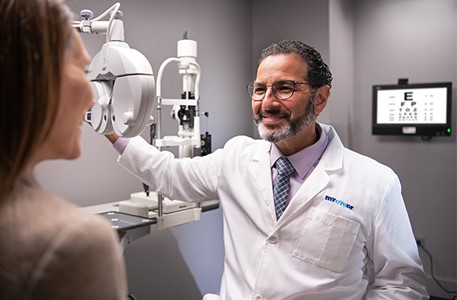
Two Incredible Offers for $199
Choose the exam bundle that works best for you: Get an eye health exam AND an annual supply of contacts OR designer glasses! Offer terms and conditions apply.
SCHEDULE EXAM
ACUVUE® OASYS FAMILY: Trust is earned
Experience why ACUVUE® is the most trusted brand by eye care professionals globally§. With contact lenses for almost every prescription, your vision is in good hands. Join MyACUVUE® Rewards and you can receive up to $250 in rewards^ per year with proof of an ACUVUE® purchase.
Earn MyACUVUE® RewardsMyEyeDr. FAQs
Optometrists perform eye exams, vision tests, and other types of non-invasive eye health care. At MyEyeDr. Plainview-Woodbury, you’ll see an optometrist during your eye exam. Take a look at some of our services for a list of the most common services provided by our eye doctors.
Ophthalmologists can do everything that an optometrist does, but they also practice medicine and perform surgery. In some cases, our optometrists will refer patients to ophthalmologists for advanced eye care.
Ophthalmologists can do everything that an optometrist does, but they also practice medicine and perform surgery. In some cases, our optometrists will refer patients to ophthalmologists for advanced eye care.
Yes, MyEyeDr. in Plainview, NY accepts walk-in appointments, but appointment availability varies by day and location. You can always check appointment availability at every MyEyeDr. in your area using our online scheduling tool or by giving us a call.
MyEyeDr. Plainview-Woodbury accepts most major vision insurances, including state plans. Contact your local MyEyeDr. eye care center to see if they accept your specific plan. Most vision insurances cover the cost of an eye exam and give you money toward new glasses or contacts. At MyEyeDr., you can count on getting the most from your benefits.
If you don’t have vision insurance, we can still help you. Contact your local MyEyeDr. for more information.
If you don’t have vision insurance, we can still help you. Contact your local MyEyeDr. for more information.
You can expect your entire MyEyeDr. visit to take between 30 and 60 minutes. Here’s how it usually goes: Our front desk staff will check you in and quickly review your paperwork and insurance information. After that, we’ll invite you back to do some pre-exam testing. Feel free to try on new frames while you wait. Next comes the eye exam. Our optometrist will ask you questions about your eye health and vision, then they’ll look into your eyes using specialized lenses.
Pro tip: Cut down on time in the waiting room by completing your pre-appointment forms online before your visit. Keep an eye out for a “check-in” email a few days before your exam date.
After we determine your new prescription, you can sit down with an optician to shop for new eye wear. It takes about a week for our lab to make new glasses. Once they’re ready, we’ll call you in for your final fitting, where we make sure your new glasses fit well and you can see clearly. Contact lens orders usually take a few days. We can ship contacts directly to your home or you can pick them up at MyEyeDr. Plainview-Woodbury.
Pro tip: Cut down on time in the waiting room by completing your pre-appointment forms online before your visit. Keep an eye out for a “check-in” email a few days before your exam date.
After we determine your new prescription, you can sit down with an optician to shop for new eye wear. It takes about a week for our lab to make new glasses. Once they’re ready, we’ll call you in for your final fitting, where we make sure your new glasses fit well and you can see clearly. Contact lens orders usually take a few days. We can ship contacts directly to your home or you can pick them up at MyEyeDr. Plainview-Woodbury.
Depending on your individual vision insurance plan, your vision insurance benefits may cover an array of eye care expenses. Many vision insurance plans can help you save money on vision care services, such as:
Eye Exams
Vision Tests and Retinal Imaging
Eye Lenses
Eye Frames
Contact Lenses (daily disposables and monthly contact lenses
Discounted Corrective Eye Surgery
If you’re not sure what your current vision insurance plan covers, contact the vision insurance experts at MyEyeDr. today or visit one of our eye care center locations near you. Our friendly insurance experts will be happy to review your vision insurance benefits and educate you on your coverage.
Eye Exams
Vision Tests and Retinal Imaging
Eye Lenses
Eye Frames
Contact Lenses (daily disposables and monthly contact lenses
Discounted Corrective Eye Surgery
If you’re not sure what your current vision insurance plan covers, contact the vision insurance experts at MyEyeDr. today or visit one of our eye care center locations near you. Our friendly insurance experts will be happy to review your vision insurance benefits and educate you on your coverage.
You can expect your entire MyEyeDr. visit to take between 30 and 60 minutes.
Yes! MyEyeDr. Plainview-Woodbury sells all the most popular glasses and contact lens brands. Our stores also offer one of the largest selections of glasses around. That means you can try on hundreds of frames at any time. If you have an updated prescription and you’re looking to reorder contact lenses, you can so on our website.
Our optometrists recommend getting a comprehensive eye exam from MyEyeDr. at least once every year. Routine eye exams are about more than just updating your prescription, so be sure to include MyEyeDr. on your annual health checklist.
Yes, you can sign up to receive statements from MyEyeDr. electronically at our Patient Portal.
Yes! Log onto our Patient Portal to see your past MyEyeDr. transactions, prescription information, and purchases.
Eye Care Services We Offer in Plainview, NY
Comprehensive Eye Exam
Eye exams, or eye health exams, are the most common service provided by MyEyeDr. Our optometrists evaluate your eyes (inside and out) to make sure you’re healthy and that your prescription is up to date.
Read More
Eye Pressure Check
During your eye exam, we will measure the internal pressure of your eye. The fluid in your eye is constantly being replaced. If eye pressure gets too high, it could damage the optic nerve or cause a condition called glaucoma.
Read More
Dry Eye Treatment
Dry eyes can have many causes. Whatever the cause, we can help patients suffering from dry eye find relief. There are several tests a MyEyeDr. optometrist can perform during an eye exam to diagnose dry eye disease.
Read More
Pediatric Eye Exams
MyEyeDr. offers true family eye care. Children’s eye health needs change with every life stage. Our optometrists can provide eye care to children of all ages, including preschoolers and older children.
Read MoreEye Conditions We Treat Near Plainview, NY

Conjunctivitis (Pink Eye)

Astigmatism

Cataracts
Myopia (Nearsightedness)
Macular Degeneration
Red Eyes / Dry Eyes
Presbyopia
Eye Infections
About MyEyeDr. in Plainview - Woodbury
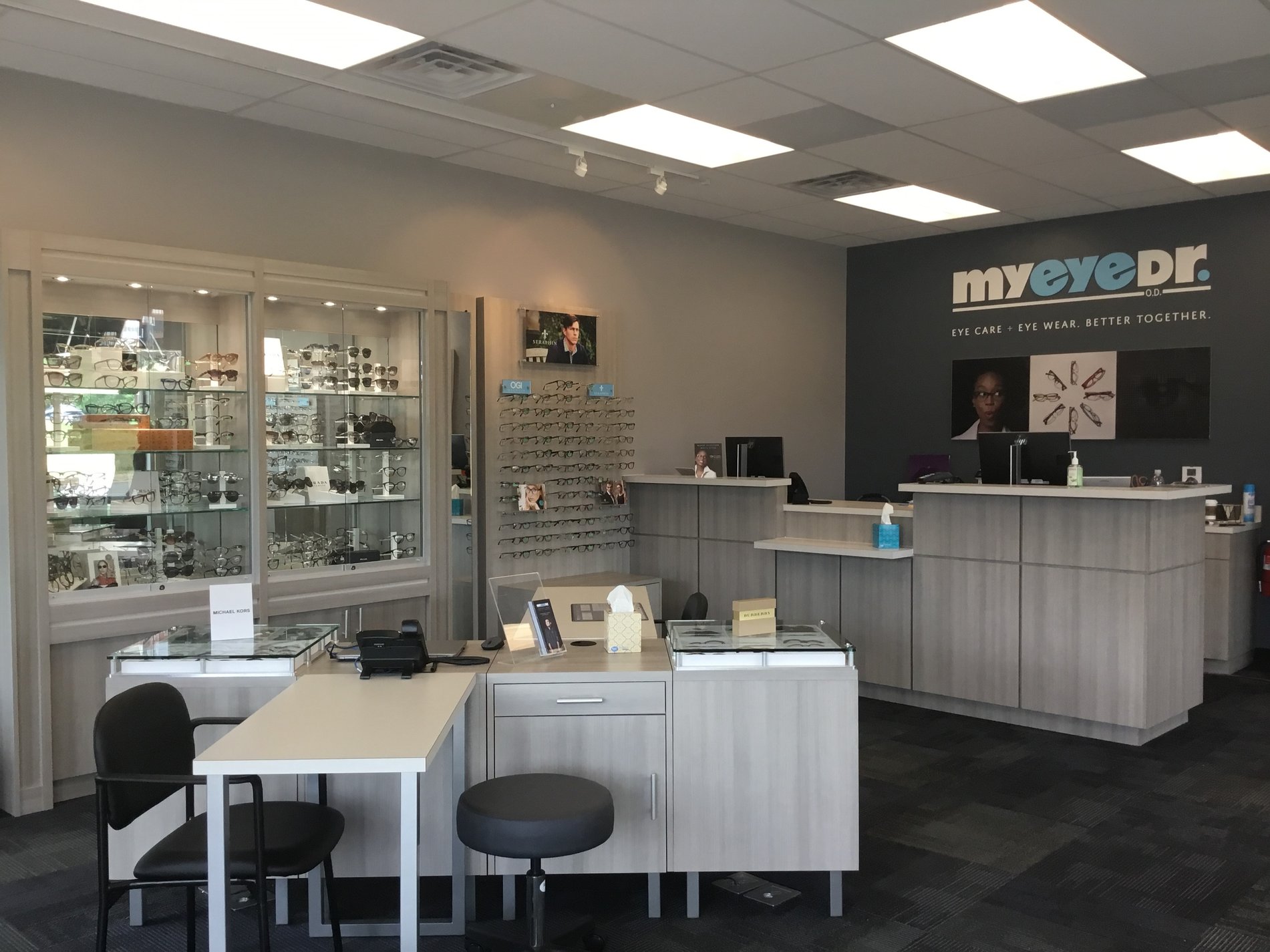
MyEyeDr. at Plainview - Woodbury combines best-in-class vision care with the biggest selection of stylish eye wear around. Schedule your eye health exam, then shop for new glasses or contact lenses.
We proudly serve our patients with personalized optometry, including family and pediatric eye care services. Our optometrists provide eye exams that not only keep you seeing clearly, but also help you manage your overall health. Eye exams at MyEyeDr. in Plainview, NY are about more than just updating your glasses or contact lens prescription. That’s because your eyes actually say a lot about what’s going on in the rest of your body. In addition to eye diseases like glaucoma, we’ve detected diabetes, high blood pressure, macular degeneration, and more in patients that came in for routine care. In many of these cases, we were able to help these patients get the early treatment they needed.
After your eye exam, our style-expert opticians can help you find the right eye wear for your situation. Shop all the top brands in glasses. Find your look, and enhance your vision by adding blue light protection, anti-reflective coatings, and more to your lenses. We’ve got the top brands in contacts too, whether you wear dailies, weeklies, or monthlies, and we accept all major insurance plans. That’s how MyEyeDr. helps you see, look, and be your best.
We proudly serve our patients with personalized optometry, including family and pediatric eye care services. Our optometrists provide eye exams that not only keep you seeing clearly, but also help you manage your overall health. Eye exams at MyEyeDr. in Plainview, NY are about more than just updating your glasses or contact lens prescription. That’s because your eyes actually say a lot about what’s going on in the rest of your body. In addition to eye diseases like glaucoma, we’ve detected diabetes, high blood pressure, macular degeneration, and more in patients that came in for routine care. In many of these cases, we were able to help these patients get the early treatment they needed.
After your eye exam, our style-expert opticians can help you find the right eye wear for your situation. Shop all the top brands in glasses. Find your look, and enhance your vision by adding blue light protection, anti-reflective coatings, and more to your lenses. We’ve got the top brands in contacts too, whether you wear dailies, weeklies, or monthlies, and we accept all major insurance plans. That’s how MyEyeDr. helps you see, look, and be your best.
Testimonials
- John from ColoradoHad a great experience here. Receptionist was extremely friendly. The person who did the initial tests was a lot of fun to chat with. The doctor was great, answered a ton of questions. Then the woman who helped me pick out glasses was super kind. Also, if you’ve read my reviews you know I love anywhere you can snap a selfie and they had awesome lighting and mirrors everywhere so I made sure to get a good one for the ‘gram.
- Natasha from MarylandWhat a wonderful experience! This was my first time needing glasses and I must say, they made the entire experience so easy and informative. I was able to set up an appointment, and provide insurance info online. On the day of my appointment, the ladies at the desk were very friendly and helpful. I had a short wait for my appointment (5 mins max and was then seen by a tech, and about 5 mins after that, I went in to see the Doctor. He was also very friendly and helpful. The staff here made me feel so comfortable. My glasses were ready within 8 days (including a weekend). They were as I ordered. If you're new to needing glasses, I think you'd enjoy your visit here.
- Chuck from North CarolinaI have been getting glasses and eye exams for over 20 years. This was the best place for the friendliest, most thorough exams of my life! Much better eye glass selection. Overall for best experience, you should definitely go here.